There are no “secrets” to success. It is the result of preparation, hard work and learning from failure. - Colin Powell
A forum where students of fire and leadership come together to discuss, debate and exchange leadership development concepts, experience, and thoughts with an intent to promote cultural change in the workforce and strengthen the wildland fire service and the communities they serve.
Showing posts with label Leadership Failure. Show all posts
Monday, November 14, 2022
IGNITE: There are No Secrets to Success
Monday, June 6, 2022
IGNITE: A Willingness to Fail
We have to be willing to fail, to be wrong, to start over again with lessons learned. - Angela Duckworth, Psychologist
[Photo: Tallac IHC]
Labels:
Food for Thought,
IGNITE,
Leadership Failure,
Lessons Learned
Thursday, January 20, 2022
IGNITE: What defines you?
Successes and failures don't determine who you are. They are experiences you grow from, but they don't define you. ♦ Frank Viscuso ♦
Monday, March 15, 2021
IGNITE: From Failure to Achievement
High-level achievement is often preceded by repeated failure. - The Daily Coach
[Photo: Pioneer Peak IHC]
#fireleadership
Monday, November 18, 2019
Thursday, May 2, 2019
Monday, April 8, 2019
IGNITE: Lessons Learned
We have to be willing to fail, to be wrong, to start over again with lessons learned. - Angela Duckworth
[Photo credit: Kari Greer/USFS]
Labels:
Food for Thought,
IGNITE,
Leadership Failure,
Lessons Learned
Monday, August 28, 2017
IGNITE: Mistakes Lead to Discovery
He who never made a mistake, never made a discovery. - Samuel Smiles
[Photo credit: Kari Greer/USFS]
Monday, January 25, 2016
IGNITE: Handling Failure
The question is not, "Are you going to fail?" The question is, "How are you going to handle your failure?" – John C. MaxwellIGNITE the Spark for Leadership. LIKE and SHARE throughout your networks. #fireleadership #fireminis
http://www.fireleadership.gov/
Labels:
Food for Thought,
IGNITE,
Leadership Failure,
Resilience
Thursday, November 19, 2015
IGNITE: When We Fail
When we make mistakes, we handle them in honorable and effective ways, fixing the immediate problem then searching for root causes. – Leading in the Wildland Fire Service, page 64IGNITE the Spark for Leadership. LIKE and SHARE throughout your networks. #fireleadership #fireminis
http://www.fireleadership.gov/
Labels:
Food for Thought,
IGNITE,
Leadership Failure,
Lessons Learned
Monday, October 19, 2015
IGNITE: Leadership Failures
He who never made a mistake, never made a discovery. - Samuel SmilesIGNITE the Spark for Leadership. LIKE and SHARE throughout your networks. #fireleadership #fireminis
Saturday, February 21, 2015
"Toxic Leaders and the Social Environments that Breed Them"
Followership is Leadership: Are you up for the challenge?
Is your organization plagued by the "institutional cancer" of toxic leadership? Effective leaders are tough, not toxic. Consider a bottom-up evaluation procedure whereby subordinates evaluate their leaders.Wildland Fire Leadership Challenge
- Read David Sloan Wilson's Forbes article "Toxic Leaders and the Social Environments that Breed Them."
Thursday, January 22, 2015
Food for Thought - Learning from Mistakes
Learn from the mistakes of others. You can't live long enough to make them all yourself. – Eleanor RooseveltIGNITE the Spark for Leadership and SHARE throughout your networks. #fireleadership #fireminis
Tuesday, January 14, 2014
Toxic Leadership Will Not be Tolerated
![]() |
| (Photo credit: Career Success for Newbies) |
"When leadership fails and command climate breaks down, tragic things can happen." ~ Major Anthony KernA Definition
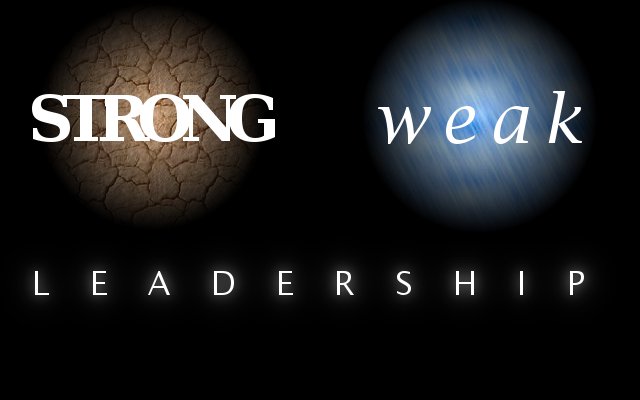
In his article "Toxic Leadership," Colonel George E. Reed shares his perspective on toxic leadership – a virus plaguing many cultures and organizations. Reed uses analyst Gillian Flynn's definition of a toxic leader: the "manager who bullies, threatens, yells. The manager whose mood swings determines the climate of the workplace on any given workday. Who forces employees to whisper in sympathy…he is the backbiting, belittling boss from hell.'"
According to Reed, three key elements lead to toxic leader syndrome:
- An apparent lack of concern for the well being of subordinates.
- A personality or interpersonal technique that negatively affects organizational climate.
- A conviction by subordinates that the leader is motivated primarily by self-interest.
Toxicity is not a leader-only problem. The above elements can be associated with followers whose toxic behaviors negatively affect the health of their organizations.
Toxic leaders undoubtedly exist in every organization. So why are these type of leaders tolerated. Reed shares a few reasons:
- Culture
- Loyalty militates against airing dirty laundry.
- Lack of reporting by subordinates.
- Respect for rank (position).
- Esteem for technical competence over leadership style.
- Personnel policies
- Waiting for the toxic leader to move on or be replaced.
- Lack of a comprehensive evaluation system to get subordinate feedback.
What can be done to improve an environment plagued by toxic behavior? Reed suggests the following:
- Purge individuals with leadership styles that promote toxicity.
- Promote a culture that fosters a positive command climate.
- Identify and purge toxic leaders.
- Be on the lookout for toxic behavior in subordinates.
- Deal with the toxic leader.
********************************************
Leader's Intent
Task: Review Colonel George Reed’s article "Toxic Leadership."
Purpose: Recognizing the organizational impact resulting from toxic leadership.
End State: Toxic leaders need not be tolerated and need to be dealt with.
Task: Review Colonel George Reed’s article "Toxic Leadership."
Purpose: Recognizing the organizational impact resulting from toxic leadership.
End State: Toxic leaders need not be tolerated and need to be dealt with.
**************************
A special thanks to guest blogger Brian Fennessy, Assistant Fire Chief, Emergency Operations - San Diego Fire-Rescue Department, and NWCG Leadership Subcommittee agency representative.
Thursday, May 9, 2013
Learning from Failure
Developing a Learning Organization (taken from Leading in the Wildland Fire Service, p. 42.)
Leaders evaluate performance at all levels to understand the causal factors of successes and failures. All those involved learn incrementally, applying today’s lessons to the next assignment. This focus on continuous improvement brings with it a responsibility to share lessons learned throughout the organization.
In a learning organization, leaders treat honest mistakes as opportunities to do better next time. Understanding that failure is a part of learning, they establish command climates in which young leaders are motivated by desire to succeed rather than fear of failure.
Monday, April 22, 2013
The Leadership Lessons of a Weak Leader
![]() |
| (Photo credit: Ed's Slipper) |
We learn a great deal from the strong leaders in our life, but we can learn equally as much, if not more, from the weak leaders that cross our path along our journey.
In his podcast "The 5 Characteristics of Weak Leaders," Michael Hyatt discusses weak leaders and what to do if you work for one. For our reader leaders, Hyatt uses the example of weak leadership as exhibited by General McClellan in Doris Kearns Goodwin's book Team of Rivals (our national reading selection for 2012).
Hyatt presents the following five flaws of a weak leader:
- Hesitating to take definitive action.
- Complaining about a lack of resources.
- Refusing to take responsibility.
- Abusing the privileges of leadership.
- Engaging in acts of insubordination.
Do any of these sound familiar?
Don't be a weak leader. Share this podcast with your team.
Monday, February 25, 2013
The Courage to Let Go
General Stanley McChrystal was a powerful and effective leader during the U.S. military campaign in Afghanistan. However, he never got to see the mission to completion because of a failure of trust between himself and his commander-in-chief, Barack Obama following the release of a Rolling Stone article,"The Runaway General." President Obama accepted General McChrystal's resignation following the release.
McChrystal shares his thoughts about his leadership and the incident CBS's Sunday Morning that aired on Sunday, January 6, 2013.
Leading with Courage Challenge
- Read the Rolling Stones article "The Runaway General."
- Watch the CBS Sunday Morning video response with McChrystal.
- Compare and contrast what you have read and watched with members of your team.
![]() |
| IGNITE the Spark for Leadership today! |
Friday, February 15, 2013
Failures as Learning Opportunities
Today's blog comes to us from Chris Graves, Training Captain/Paramedic of the Reno Fire Department. Chris has put together a short lesson on "Failures as Learning Opportunities" by benchmarking the healthcare industry.
Paul Iske on Brilliant Failures in Healthcare
- Watch Paul Iske's TEDxMasstricht video "Brilliant Failures in Healthcare."
Video Highlights:
- No progress without failures.
- In a world as complex and dynamic as ours, not everything is predictable.
- To find new ways for value creation, the approach of trial and error is sometimes the only way to make progress. However, often people are stimulated to reduce risk and to hide mistakes.
- Share your failures at the Institute of Brilliant Failures.
The Institute of Brilliant Failures Culture Checklist
The Institute of Brilliant Failures is in the process of developing a "Brilliant Failures Culture Checklist." Review the checklist and observe the simple relationship to principles of high reliability organizing. The checklist will be built "around the following three key organizational development themes related to a "Brilliant Failure Attitude:"
- Easing off the 'control button.' Control tends to suppress evolutionary, spontaneous processes. The windows of opportunity that arise are left unexplored with no option to capitalize on their potential. To counter this organizations need to examine where they could control less and navigate more.
- Encouraging the right type of risk taking. Many organizations, and employees, tend to play safe, to stay in their comfort zones. As a result they take implicitly or explicitly take at the low end of the risk-return trade off. To counter this organizations need to examine where, and what type of risk taking, they want to encourage.
- Recognizing the value of, and learning from, failure. Many organizations tend to either brush failure under the carpet or punish those responsible. In this respect the brilliant failure attitude is: 'there is no such thing as failure only feedback.' Organizations need to put processes in place to recognize the value of 'failure' and maximize the learning from this.
Brilliant Failures Case Studies
- Read the Institute's brilliant failures case study analyses. (Each follows a familiar format reminiscent of AARs. The identification of intent was the set-apart from the AAR standard four questions.)
Thursday, July 12, 2012
How Far Would You Go?
| (Photo credit: FanPop.com) |
On July 12, 2012, Freeh Sporkin & Sullivan, LLP released their 267-page report: "Report of the Special Investigative Counsel Regarding the Actions of the Pennsylvania State University Related to the Child Sexual Abuse Committed by Gerald A. Sandusky." What seemed to have been a tightly held secret has developed into one where many knew of the abuse--from janitors to the coaching staff and top-level Penn State leaders.
As horrific and extensive in nature as the Penn State scandal may be, I believe every organization should take a moment to ponder this historic leadership failure. What can your organization learn from the findings and recommendations found within the Freeh Report?
In closing, I ask wildland fire leaders to ponder and/or discuss the following questions:
- How far would you go to cover up something or someone or to protect your job or the organization?
- Despite your position in the organization, do you have the leadership fortitude to do what's right and expose a wrong--even if it means losing your job?
- As a senior leader in a crisis situation, do you have what it takes to expose a wrong doing that has occurred under your command?
Wednesday, June 20, 2012
Follow the Leader or Not
![]() |
Source: Mann Gulch Staff Ride
|
Reflection 1 – Wag Dodge’s Escape Fire during the Mann Gulch Fire:
You are the incident commander on a wildfire located to the east side of the Continental Divide in western Montana on August 5, 1949. You and 15 smokejumpers attack the fire. During the course of suppression, the wind picks up and causes the fire to cross a gulch and cut off your access to the Missouri River and a safe anchor point. You and the crew attempt a retreat up Mann Gulch; however, your route to the ridge top is hampered by rockslides, outcroppings, and steep terrain. The fire is burning above and below you and the crew. You order the crew to break their training and drop their gear—some do not hear or abide your command. You decide to do an unconventional tactic and light an “escape” fire and appeal to your men to follow you through the flames to the blackened area. Your men refuse to follow and retreat on at their own will. Thirteen men perish as a result of a burnover; two follow your fire’s edge to the ridge top and escape the flames.
![]() |
Source: CivilWar.org
|
Reflection 2 – General Robert E. Lee’s Decision for Pickett’s Charge at the Battle of Gettysburg:
You are the general in command of Confederate troops near Gettysburg, PA, on July 3, 1863. You and your men have been engaged in combat for months, and are hungry, injured, and fighting friends and kinfolk. After days of fighting, Union troops have secured the high ground. You order 12,000 troops to open attack on the high ground contrary to military strategy and with great opposition from General Longstreet whose men have engaged in many battles, traveled a great distance and are tired. Longstreet does not believe in engaging the Union troops on the high ground, instead battling south towards making a direct attack on Washington, D.C. You believe you have more troops than the Union and can outlast them. Your artillery opens fire and the battle ensues, including an assault by Longstreet’s men. Nearly 7,500 Confederate and 1,500 Union troops lose their life in the campaign where you eventually retreat. You are heard to say, “It’s all my fault, boys. It’s all my fault.”
Things to Ponder:
- Wag Dodge, a veteran fire leader, makes a decision to try an unproven tactic. His men question his model and fail to follow. He survives while most of his crew perishes. The model is adopted as standard operating procedure in wildland firefighting.
- General Robert E. Lee, a battle-wise leader, fails to question his model. He survives, while Confederate forces take significant losses. The decision is deemed a mistake and forever analyzed by historians and future leaders.
- Why did Lee’s men follow him?
- Did either Lee’s or Dodge’s men understand their leader’s intentions?
- How does fatigue, stress, and physical well-being affect decision making?
Resources:
- Mann Gulch Fire: A Race That Couldn’t Be Won. Richard C. Rothermel
- Lee’s Mistake: Learning from the Decision to Order Pickett’s Charge. David C. Gompert and Richard L. Kugler
Labels:
Decision Making,
Followership,
Innovation,
Leadership Failure,
Stress
Subscribe to:
Posts (Atom)


![We have to be willing to fail, to be wrong, to start over again with lessons learned. - Angela Duckworth [Photo credit: Kari Greer/USFS] (drone against a blue sky with a few whispy clouds)](https://blogger.googleusercontent.com/img/b/R29vZ2xl/AVvXsEgO6j7RFWHQ7lTkVSPlvtkGo60fe7hbp7E4oeGNyQK19ViINKGBViqs37oehd7CcoGBabTAynE8zF0zA_ncirAWdMyOiOMvOaf2L2kCdtLFKHiFNjEgyefYmqCIhSJAgTxkyM0XOq7rVYs/s400/we-have-to-be-willing-to-fail_Duckworth.png)


