Wednesday, January 30, 2013

Eyes Forward


Leaders in the wildland fire service chose to reach beyond the challenges of learning the craft of firefighting by stepping forward to lead people in complex and dangerous environments. Fire leaders trade the indulgences of complacency, second-guessing, and fault-finding for the responsibilities of bringing order out of chaos, improving our people, and building our organizations.

As our careers progress, some move from being a leader of people to being a leader of leaders to being a leader of an organization. At each level, we rise to meet the challenges of adhering to our values of duty, respect, and integrity and assume the responsibility of instilling those values in others.

A leader’s accomplishments are measured in lifetimes. Our character, decisions, and actions create powerful ripple effects that continue to influence people and organizations long after we are gone. This is the legacy that each generation passes on and entrusts to our successors.

(Taken from Leading in the Wildland Fire Service, p. 67.)

*************************

Your legacy begins now. Consider using the 2013 Wildland Fire Leadership Campaign - Leading with Courage as a means to create your legacy!

Tuesday, January 29, 2013

Monday, January 28, 2013

Heroic Efforts Save Property and Resources on Charlotte Fire

2012 Accomplishment Story: Idaho
In the early afternoon of June 28, 2012, a wildfire ignited in the wildland urban interface (WUI) near the city of Pocatello, Idaho. As soon as Bureau of Land Management (BLM) Idaho Falls District Fire Management Officer Rick Belger heard the fire's location, he knew it would be difficult to manage…

Smoke plume from the Charlotte fire as seen from Interstate 15 South Bound.

Aerial view of the Charlotte fire.
"The topography in the area combined with difficult road access and the number of residential units at play was going to be incredibly challenging to deal with," said Belger. "We told our crews to remember their training, stay safe and that no home was worth a life."

The hot dry winds, rugged terrain, dry fuels and high temperatures posed major operational problems for firefighters in the initial attack phase. In just a few hours, the fire burned over 1,000 acres, forcing the evacuation of over 1,500 residents.

Austin Catlin, engine captain for E3421, had just been assigned to the east division when an owner asked them to save his house. Moments later, the juniper around the house ignited, creating such extreme radiant heat that the fire crew and home owner had to leave the area due to safety concerns. Fortunately, the home survived the flame. "While it was impossible to save every house, I was impressed with how everyone functioned during the initial attack phase of the operation," said Catlin. "We've worked hard over the years to ensure good coordination between city, county and federal firefighting agencies, and I feel that all those practice drills paid off."

Helicopter completing bucket drops on internal hotspots.
While the Bannock County Sheriff's Office and Idaho State Patrol conducted evacuations, the American Red Cross opened an evacuation center at the Holt Arena (Idaho State University football stadium). An outpouring of support from the community was extended to all those impacted by the blaze. When the smoke cleared on Saturday, the Pocatello Fire Department reported the loss of 66 homes and 29 additional outbuildings and barns.

Idaho Falls District Fire Management Officer Rick Belger accompanies Idaho Falls District Manager Joe Kraayenbrink on a tour around the burned BLM acres.
 Firefighters took heroic measures to work the line and prevent as much damage as they could. Without their quick response, more homes and resources would have been lost. BLM spent countless hours assisting the city and county in mop-up activities. They even held Fire Wise events following the wildfire.

Statewide, Idaho BLM fire resources responded to 367 fire incidents duing the 2012 fire season, which burned nearly twice the ten-year average. Of the 367 fires, 242 were human caused and 125 were lightning caused. These fires burned a total of 683,000 acres.

BLM Idaho accomplished 109,000 acres of fuels work, 102 percent of the fiscal year (FY) 2012 target. Of this, 106,000 acres were within the WUI and 2,800 outside the WUI. Other notable successes include the partnerships with Mule Deer Foundation, United States Department of Agriculture (USDA) Natural Resources Conservation Service, United States (US) Fish and Wildlife Service, Pheasants Forever and Idaho Department of Game and Fish. Critical planning was completed for out-year projects in community watersheds, notably in the areas of Downey and Pocatello. Existing fuels treatments were effective in changing fire behavior to aid suppression efforts in a variety of locations, both WUI and non-WUI projects in various locations.

Story by: Sarah Wheeler, Public Affairs Specialist, BLM Idaho Falls District

*********************
Reprint from "The BLM Daily," December 28, 2012.

Friday, January 25, 2013

Digging Deeper: Leadership - TriData Report


As we dig a little deeper into the Wildland Firefighter Safety Awareness Study, we examine "Leadership" findings from Phase I. Is this still true today or have we been successful to change our culture? Do we still have work to do?

Leadership (taken directly from the study)
Good leadership - getting people to do the right thing - is crucial in emergencies of all types. There is a generally high regard for incident commanders, and a feeling that most people in supervisory positions are suitable. But there also is a strong feeling that a small but non-trivial fraction of supervisors are either too inexperienced, or of the wrong temperament, or simply not good leaders. Only about 10-20 percent of division supervisors and crew supervisors were thought to be unsatisfactory, but that small fraction represented a significant amount of exposure to potentially unsafe decisions.

Wednesday, January 23, 2013

WOW is Here!

What is Women of Wildfire?


WOW is a collaborative movement led by women within the wildland fire service to create a network showcasing female leadership, sharing resources and success stories, providing a system of support and mentoring, and furthering the mission of the Wildland Fire Leadership Development Program (WFLDP).

The Inspirations Behind WOW

Pam McDonald, Logistics Coordinator for the NWCG Leadership Subcommittee and visionary for the 2013 Wildland Fire Leadership Challenge - Leading with Courage, wanted to create an example of what individuals and units could do to support the campaign as well as submit as an idea for the "IGNITE the Spark for Leadership - From the Field for the Field" contest.* Riding the social media buzz around the Public Broadcast System's spotlight initiative on women Makers, Pam initiated a test pilot feature via the WFLDP's Facebook page which received little attention.


In the spirit of the campaign theme, Pam got up the courage to ask the coordinator of Women of Wildfire (WOW) at the National Interagency Fire Center (NIFC) if she could adopt the name for a leadership initiative and build upon the success of local efforts of creating a network of women who have walked together every September since 2006 in the  St. Luke's Women's Fitness Celebration. Kris King, NIFC WOW Coordinator, agreed and the plans were set in motion to launch the initiative once Jenn Smith, NIFC External Affairs and NWCG Leadership Subcommittee Communication, developed an identity for the initiative through a logo. With that, WOW was born.


Foundational Principles of the WOW Initiative

As well as the WFLDP Values and Principles, WOW follows "The Five Practices and Ten Commitments of Leadership" developed in The Leadership Challenge by James M. Kouzes and Barry Z. Posner.

(Photo: The Leadership Challenge)
The Five Practices:
  • Model the Way
  • Inspire a Shared Vision
  • Challenge the Process
  • Enable Others to Act
  • Encourage the Heart
The Ten Commitments:
  1. Find your voice by clarifying your personal values.
  2. Set the example by aligning actions with shared values.
  3. Envision the future by imagining exciting and ennobling possibilities.
  4. Enlist others in a common vision by appealing to shared aspirations.
  5. Search for opportunities by seeking innovative ways to change, grow, and improve.
  6. Experiment and take risks by constantly generating small wins and learning from mistakes.
  7. Foster collaboration by promoting cooperative goals and building trust.
  8. Strengthen others by sharing power and discretion.
  9. Recognize contributions by showing appreciation for individual excellence.
  10. Celebrate the values and victories by creating a spirit of community. 
What Now?

Every movement starts with an individual who has an idea and grows from there. WOW will become what the women of the wildland fire service want it to be. The sky is the limit to what those empowered can do and create. In the weeks and months ahead, women (and men) from around the globe will come together to create a grassroots effort to build a network supporting the WFLDP as well as promote female leadership development and collaboration. Here are some ideas to start an individual or local movement:
  • Share the news about WOW with those within your sphere of influence.
  • Help promote the 2013 Wildland Fire Leadership Campaign by sharing the Reference Guide by sharing to your fire leaders.
  • Create a local unit Women of Wildfire support network and inspire a shared vision and enable others to act.
  • Read Kouzes' and Posner's The Leadership Challenge.
  • Use the "Women of Wildfire" forum at the top of the WFLDP Facebook page to share your stories and begin to network.
  • Contact Pam McDonald, NWCG Leadership Subcommittee Logistics Coordinator, at pmcdonal@blm.gov or 208-387-5318 for more information.
  • Dream!

A Look at the 2013 Wildland Fire Leadership Challenge - Leading with Courage

Campaign Task:
Provide an opportunity for wildland fire service personnel to focus leadership development activities on a nationally-sponsored, centrally-themed leadership campaign and recognize local leadership participation efforts.
Campaign Purpose:

To foster a cohesive effort to promote leadership across the wildland fire service.
To provide a template that can be used to encourage leadership development at the local level.
To provide a mechanism to collect leadership best practices and share throughout the wildland fire service.
Campaign End State:

Creation of a wildland fire service culture that willingly shares leadership best practices in order to maintain superior service-wide leadership.
 _____________________________
* WOW is exempt from contest consideration.

Tuesday, January 22, 2013

The King's Speech - Leadership in Cinema


(Photo credit: The Churchill Center)

Our partners at Drexel's LeBow College of Business have finished their winter course and are in the process of finalizing a series of lesson plans for the Leadership in Cinema program. Their first installment is "The King's Speech." Check it out in the Leadership in Cinema LeBow College of Business library today!

Building Dikes of Courage

IGNITE the Spark for Leadership today!

Friday, January 18, 2013

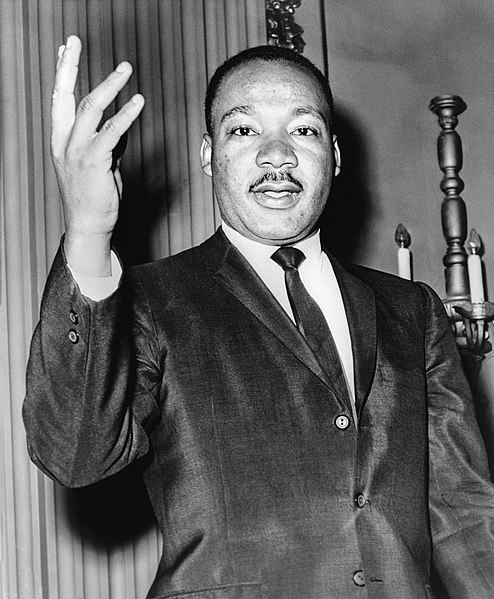
Remembering the Dream


(Photo credit: Wikipedia)
Michael Hyatt wrote a great piece on Martin Luther King, Jr. titled "Eight Leadership Lessons from Martin Luther King, Jr." in which he presents what he believes King's "I Have a Dream" speech provides insights into what it takes to be a truly great leader. Be sure to watch the video and then reflect upon how do you measure up to Hyatt's eight characteristics?
  1. Great leaders do not sugar-coat reality.
  2. Great leaders engage the heart.
  3. Great leaders refuse to accept the status quo.
  4. Great leaders create a sense of urgency.
  5. Great leaders call people to act in accord with their highest values.
  6. Great leaders refuse to settle.
  7. Great leaders acknowledge the sacrifice of their followers.
  8. Great leaders paint a vivid picture of a better tomorrow.

Digging Deeper: Problem Areas - TriData Report


In this installment of Digging Deeper, we'll look at the "Problem Areas" survey participants identified in Phase I of the Wildland Firefighter Safety Awareness Study (also known as the TriData report). As student of fire, analyze the following excerpts. Have we made changes or do the problem areas still exist?

Problem Areas (taken directly from the study)
There are widespread concerns that the organizational culture has undergone significant changes that contribute to a decrease in safety. The experience level of the firefighting work force and leadership is perceived to have dropped. That has many impacts, none were more important than in crisis decision making, which depends on experienced personnel making good decisions under stress. The experienced personnel leaving firefighting are not all retiring. Some are being driven out of firefighting by loss of incentives and lack of encouragement, and they are not being replaced fast enough by adequately qualified personnel.

There also are grave concerns that the high public visibility of wildland firefighting puts political pressures on field leadership that in turn influence strategy and tactics, and increase danger to firefighters. There is a perception that the situation is worsening as federal firefighting budgets and resources are declining without a concurrent lessening of public expectations. The trend continues toward more severe wildland fires, and more people being at risk in the urban/wildland interface. The increasing number of fires in the urban/wildland interface, coupled with the changes of tactics needed to protect structures; more pressure to perform and not retreat; and the lack of training on the risks around structures (e.g., hidden propane tanks, electrical wires) combine into a major concern. There is a demand for more knowledge about fighting fires around structures, and a need to further educate the public on mitigation measures they can take.

Among other key aspects of the organizational culture as it affects safety are the following:
  • There is a tendency to try to do as much as before with less resources, which sometimes pushes the envelope of safety. The safety issue is further exacerbated by declining forest health, accumulation of fuels from years of fire exclusion and lack of an adequately sized prescribed burn program. Fewer firefighters are available to handle more frequent and more severe fires while feeling less than fully supported, and while experience levels drop. This was considered another dangerous confluence, especially by the most experienced people interviewed.
  • Too many firefighters still feel uncomfortable in raising safety issues. They perceive that the organizational culture does not allow them to point out safety problems in the field without fear of retribution, despite assurances to the contrary. There has not been acceptance and practice of a philosophy like that used in flight operations (the crew resource management system), in which it is not only acceptable to point out safety problems, but one is expected to do so. On the other hand, there is concern about letting the pendulum swing too far the other way, and having crews frequently balk at assignments, with the potential for disruption of operations and increasing danger to those crews that remain.
  • There is a broad perception that to bridge the experience gap, some managers have been fast-tracked into positions of responsibility that are above their ability to handle safely. Some of those fast-tracked were among those raising the alarm. This perception was shared by 82 percent of the overall firefighter population, and by 84 percent of women and minorities.
  • There are feelings that seasonal employees are not adequately appreciated, trained or given incentives to return in the current organizational culture, which reduces the experience base.
  • There is a perception that firefighters today have less woodland experience and therefore are more prone to accidents. More scientists (‘ologists) fill positions, and a smaller portion of the workforce is interested in firefighting. It is no longer considered necessary for all or most to participate in firefighting. Those who do participate feel they do not get enough  encouragement, and may be given subtle or not so subtle signs that they are abandoning their real jobs when they go to fight fires.
  • There is not a high enough degree of confidence that key information gets through to crews during a fire, especially regarding weather, fuel conditions, and when requested resources will arrive. The culture is such that crews do not have a checklist of information they should expect, and they do not always ask for what they do not receive. A highly ranked communication problem was the lack of adequate exchange of information between crew shifts, and a lack of adequate briefings en route to fires and at fires, with too little input allowed or solicited from crew supervisors.
  • There is concern that the organizational culture allows red-card certification for some who do not merit it. The culture does not take the certifications seriously enough, and the experience standards for IMT positions are thought by many to be too low.
  • About a third of women and minorities reported feeling they get less information than others at fires − but overall, the women and minorities surveyed expressed the same safety concerns as all others. The response profiles of male, female, Hispanic, Native American, and other firefighters regarding safety issues were remarkably similar, to the point that it could be  considered a tribute to the change in organizational culture in the direction of fairness.
  • Equipment drew relatively little criticism except in two areas: radios and shelters. There is not yet universal provision of radios for each Type II crew or squad, and these are problems of signal clarity, interference and inadequate channels at times. Obviously all people must be able to be reached expeditiously for safe operations. The second major equipment concern was shelters, especially the lack of realistic training with them, their being viewed as a backup that allows one to take risks, and the confusion about what constitutes an adequately sized safety zone in which to deploy a shelter.
 References