Tuesday, October 29, 2013

A Framework for Leadership


Team of Rivals book cover


Today's blog was inspired by Ted Coine's blog "This Leadership Framework Helped Lincoln Save the Union. You Should Try It."

Ted uses the lessons he learned studying President Abraham Lincoln's leadership legacy. He believes that Lincoln's leadership success is attributed to what he calls a "Principles-to-Practices Framework." Those who took the 2012 Leaders are Readers challenge and read Doris Kearns Goodwin's Team of Rivals are well aware of Lincoln's simplicity and focused leadership. Here is how Ted Coines views Lincoln's leadership using his Principles-to-Practices framework.

Friday, October 25, 2013

A Look Back at The Cedar Fire - 10 Years Later

(Photo credit: San Diego Fire-Rescue Department)

"The Cedar Fire was reported on Saturday, October 25, 2003, at approximately 5:37 P.M. The fire, burning under a Santa Ana wind condition eventually consumed 280,278 acres and destroyed 2,232 structures, 22 commercial buildings, and 566 outbuildings, damaging another 53 structures and 10 outbuildings. There was 1 fire fighter fatality, 13 civilian fatalities and 107 injuries. The fire was under Unified Command with the United States Forest Service, the California Department of Forestry and Fire Protection, and local government.” ~ 2003 Cedar Fire Green Sheet, California Department of Forestry and Fire Protection
Sandra Millers Younger shares her perspective of the Cedar fire in her recently released book "The Fire Outside My Window." Younger does a great job sharing her experience as a homeowner and complementing her story with excerpts from individuals involved with fire suppression and emergency operations. 

Tuesday, October 22, 2013

An Education in Fire - A Look Back at Yellowstone

“Wildland fire is a phenomenon essential to nature’s design. But fire, whether caused by natural force or human beings, can also pose a threat to people and communities.”~ Leading in the Wildland Fire Service

The fires that plagued Yellowstone National Park in 1988 may be a distant memory for some; however, fire leaders charged with leading the effort are well aware of the challenges this chaotic leadership environment presented.

The New York Times reflects upon the summer of ’88 and paints a picture of what has shaped the leadership environment for today’s leaders—especially those facing similar circumstances with this year’s Rim fire in Yosemite National Park.


Fire leaders lead because leading is where they make a difference. The job of bringing order to chaos is not always easy. Those who choose to lead know their decisions may impact the fire service for years to come, but the willing accept their role in order to improve their people's lives and strengthen our organizations. (adapted from Leading in the Wildland Fire Service)

Thursday, October 17, 2013

Powering Your Influence

marbles linked to show influence
(Photo credit. Alphia)
 Situational Leadership (Leading in the Wildland Fire Service, pp. 38-39)

Leaders use a variety of power sources and leadership styles to influence others. Being able to select the most effective leadership tools in a given situation is an application of situational leadership.

Power can be defined as a person’s ability to influence the actions of others. How leaders use power shapes others’ perception of their ability to lead. A leader’s ability to read a situation and apply the appropriate source of power enhances their ability to lead.

The more visible power is, the less it works. The less explicitly leaders rely on power to accomplish tasks, the greater their power actually is.

Those who rely on position, reward, or discipline power have less real influence on others. On the other hand, those who are able to rely on expert power and respect power—less overt forms of power—often influence in ways that have more far-reaching and deep effects.

To gain power, the most effective leaders give it away. By giving away some power to team members, leaders actually increase their influence and strengthen their ability to lead.

Leaders also use different leadership styles as appropriate for the level of experience of the people involved and the situation.

With inexperienced people or time-critical situations, leaders use a directing style, explicitly telling people what needs to be done. As team members gain experience, leaders increasingly seek team members’ participation in discussions and decision making, working together to devise plans and actions.

Leaders keep sight of the long-term goal of being able to delegate most tasks and responsibilities to experienced and capable team members, setting the conditions that enable them to grow as leaders.

At every step of the way, leaders judiciously employ the amount of supervision required. They provide adequate feedback to make sure people can successfully accomplish the mission yet avoid micro-managing competent team members.

A Video Example
Dr. Kevin Nourse briefly talks about power and influence in this YouTube video:


Discussion Questions
  • How does the authority to lead influence the ability to lead? Or does it?
  • How does situation awareness fit into a leader's source of power selection?
  • Give an example of how you have given power away to team members.
  • Tuesday, September 24, 2013

    Leaving Your Fingerprints Behind


    Do you remember the moment when you realized you had something worth sharing with others and made the decision to lead? I call these "leadership awakenings." They are the moments when followers decide to become leaders and focus moves from self to others.

    I'm not sure I can pinpoint my exact leadership awakening moment, but I do know my desire occurred very early in life—some might say I was a natural or a born leader. My leadership journey began as a Brownie in my small church's Girl Scout program. Even at the age of 8 or 9, I believed in working together, exploring my community, participating in meetings, and moving out into the community and wider world.

    (Where it all began...)
    As I progressed through grade school and into high school, I added 4-H, FFA, and various student organization leadership positions to my resume. To this day, my position as senior class president lives on. In fact, I just organized and hosted my 30th class reunion.

    When I became a junior/senior high school teacher, I began doing what the individuals who led and mentored me did—I began leaving my “fingerprints” on others. I became a class advisor, student council advisor, and established a local chapter of Business Professionals of America for my students. I mentored many students who are now paying it forward and leaving their “fingerprints” on society.

    My seasonal fire career began as a timekeeper in 1984. Over 15 years, I worked up to an assistant center manager teaching others the "fine art" of dispatching. In 2000, I took a permanent position with the BLM at NIFC. Today, I am a writer/editor for the BLM Fire Training and Workforce Development Program. My passion lies with the work I do with the Wildland Fire Leadership Development Program (WFLDP).  For the last 12 years, I've left my "fingerprints" on more people than I can imagine through the WFLDP blog and Facebook page or the programs and initiatives I've started or administered, including Leadership in Cinema, the annual leadership campaign, and the Professional Reading Program.


    I don't share these things to "toot my own horn," but to give you a sense of who I am and the  leadership journey I have traveled and continue to travel as one of those entrusted to maintain the WFLDP.  I challenge other wildland fire leaders to do the same. I felt it was time for my readers to know who "puts herself out there" on the blog and the Facebook page.

    Each time I've made the decision to lead, I've also made a commitment to develop other leaders. My hope is that my example and passion inspires others to join the grassroots effort to IGNITE the Spark for Leadership.


    Wildland Fire Leadership Challenge

    Over that last couple of months, I have sat down with a few wildland fire leaders who shared their leadership awakening moments. Here is what I concluded after they shared their emotional stories:
    • They didn't necessarily want to tell their story, but they did.
    • They were profoundly affected when they realized they had something to share.
    • They are passionate about leadership.
    • They care about those they lead.
    • They want to make a difference.
    Do you remember your leadership awakening moment? Share it with us.

    Do you have something to share and can leave your "fingerprints" on society? If so, find a way in your community (work or otherwise) and make an impression!

    Join the grassroots effort to IGNITE the Spark for Leadership. For more information, contact  BLM_FA_Leadership_Feedback@blm.gov.

    ___________________________________

    About the Author:
    Pam McDonald is a writer/editor for BLM Wildland Fire Training and Workforce Development and member of the NWCG Leadership Subcommittee. The expressions are those of the author.


      Friday, September 20, 2013

      Acknowledging Greatness

      (Photo credit: DP Vintage Posters)
      "To be good is not enough, when you dream of being great."
      Jim Kouzes shares his insight on the power of symbols and the importance of shared values in this On Leadership video minute.

      What gifts or symbols do you share within your sphere of influence to acknowledge greatness?

      Wildland Fire Leadership Challenge


      Tuesday, September 17, 2013

      Magic on the Mountain

      (Photo credit: Mountain Guides.com)
      "The most important thing in climbing is the inner strength to help each other, so that not just the strongest but all the members of the group reach the goal."~ Ida Hiroshige
      Over the last couple of months, I have used Roger Snyder's Mt. Everest climbing experience as a backdrop for my blogs. I chose to share my experience with Roger because of the influence his story had on me.

      Much has been written and spoken about the parallels between mountains, mountain climbing and leadership. I've heard Preston Cline brief the NWCG Leadership Subcommittee and L-580 participants about the power of the Wharton MBA Leadership Ventures treks where participants are placed under "authentic levels of stress and uncertainty in order to improve their ability to lead." I've read "Into Thin Air" and witnessed the leadership transformation of many L-380 students of fire.  I've shared other mountain climbing stories with you on this blog. But is was this experience with this Mount Everest storyteller that made an imprint on my soul.

      There is something very powerful about hearing a person's story, especially when it is fresh in their mind and telling it for the first time. Roger had only been away from the mountain for about a week when I heard his story. He had lost weight and was still feeling the physical and mental effects of the climb. He hadn't culled his photographs into a logical sequence. It was a "raw," unscripted, and unrehearsed presentation; and I was swept into the story as if it were a dream.

      Roger had never met most of us to whom he told the story. That didn't stop him from speaking from the heart. He talked of his strengths, his weaknesses, the team that helped him along the way, and the joys and sorrows of life and death on the mountain. His passion became my passion for telling a slightly different stories to you.

      Mountain climbing is not something that I have much knowledge or interest in doing myself; however, Roger brought it to life for me. I may never scale the world's highest peak, but I am confident, the lessons I learned from my experience will be useful for when I need to tackle a problem that seems as impossible as reaching the summit of Mount Everest.

      • The "impossible" is possible.
      • With danger comes opportunity.
      • Fear limits our ability to conquer greatness.
      • Time may be needed to realize the power of an experience.
      • Personal accomplishment often takes a team effort.
      • Telling our stories can inspire others.
      • Respect one another.
      • Do good.
      • Be prepared.

      When asked how it felt to conquer Mount Everest, Roger said, "It's all so surreal; it hasn't sunk in yet." I'm not sure the full effect of hearing Roger's story has been realized. It is the magic on the mountain that has forever changed me and the stories I share with you.

      **************************
      The magic was in the story, but watch what is impossible for most become the possible for members of Roger's expedition team...


      Wildland Fire Leadership Challenge
      • Stories are powerful. Assemble a group of wildland fire veterans and leaders and listen to their stories. 
      • Do you have a story that others need to hear? Tell it. 
        • If you haven't already, be sure to check out this story from South Canyon that we all need to hear.
      • Attend or watch online leadership presentations featuring stories unrelated to the wildland fire environment. 
      ______________________________
      About the Author:
      Pam McDonald is a writer/editor for BLM Wildland Fire Training and Workforce Development and member of the NWCG Leadership Subcommittee. The expressions are those of the author.


      Thursday, September 12, 2013

      Remembering Eva

      (Photo credit: Wildland Fire.com)
      “This Day in History” is a brief summary of a powerful learning opportunity. You can use this summary as a foundation and launch point for further dialogue and discussion. Apply these lessons learned to yourself, your crew, your team and your unit.
      Tuolumne Fire - September 12, 2004 - California

      Incident Summary: The Tuolumne Fire is reported by a Stanislaus lookout at 1233 hours. Dispatch initiates a standard response, including the dispatch of a helicopter with helitack crew. 1259 Air Attack (ATGS) arrives over fire and reports fire to be between 5-10 acres, spreading up-slope and up-canyon with a steady 3-5mph wind. The fire is burning near the bottom of the Tuolumne River Canyon, just upstream of a major river confluence at 1450’ elevation in light, flashy fuels, predominantly oak leaf litter, light grass and mixed brush with an oak overstory consistent with Fuel Model 2. FDFM (Fine Dead Fuel Moisture) is 4-5% and live fuel moistures at critical stage. Temperature is 89-94, RH 18-24%, and there is no frontal or thunderstorm activity. The canyon is very steep, observed to be 80-120% slope. At approximately 1335 the helitack crew begins constructing downhill fireline. 10 minutes later they take emergency action when a sudden wind shift that causes a fire flare-up which overruns their position. Of the 7 person crew, 3 firefighters suffer minor injuries and one firefighter is killed.

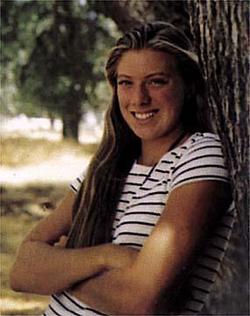
      (Photo credit: Find A Grave)
      1305 the helicopter arrives over the fire and drops the crew on a gravel bar 3/4 mile downstream of the fire. They hike from the LZ up-canyon to a dirt road that parallels the river and walk the road toward the right flank of the fire. The fire is burning both above and below the road. Their helicopter is directed to begin dropping water on right flank above the road.

      A local Division Chief is dispatched to the fire to be IC and drives past the helitack crew to the right flank. He observes a slow backing fire and returns to the location of the helitack crew, who are still hiking. Talking with the helitack captain, he does not identify himself as IC, announce a strategy or specific tactics. He does state that he wants the crew to find a safe anchor point but the crew understands him to want them to “anchor this fire on the right flank, the road down to the river”.

      1335 the crew arrives at the right flank on the road and looks for access to the river and safe access to the bottom of the fire.

      ATGS and IC decide to continue to use the helicopter on the right flank above the road. The helitack captain hears this exchange on the radio. ATGS receives a radio call about a spot fire and misses discussion about helitack crew working below the road. (In a post-incident interview, the ATGS will state that he thought the crew was above the road.)

      After scouting down the right flank about 70 feet, it is decided to construct indirect fire line downhill for 250 - 300 ft to the river burning out from the road as they go. Safety zones are identified as down to the river, up to the road or into the black. All crew members agree with the plan and inform their helicopter pilot.

      An engine is assigned to support the helitack crew. The crew is not notified that the engine was assigned to support them and that it was close by.

      1340 firefighters located about 30 ft down the line from the road remark that the burn out is pulling in nicely. There is a “flutter” in the wind and the 3 firefighters closest to the road are told to grab backpack pumps just in case.

      1345 a sudden wind shift causes the fire to flare-up, change direction, and overrun the crew. 30 seconds later one crew member is dead. No fire shelters are deployed.

      California Department of Forestry engine tribute to Eva Schicke
      (Photo credit: Not Now Not Ever.com_
      Lessons Learned Discussion Points:

      • During size-up, what fire behavior did the personnel observe? If you were at a fire in a similar setting, what local terrain features and other factors might lead you to distrust the fire behavior seen? (IRPG pg 4)
      • It is common for people to have communication problems. On an incident where these issues can easily compromise anyone’s life safety, what are you going to do to minimize communication errors- as a crewmember? Crew boss? Pilot? IC?
      • Your crew has been dispatched to this fire. How will you handle the “Lookout” aspect of LCES? It is common to hear that “everyone on the crew is a lookout”. Discuss what each person must do to make this an effective alternative to the “traditional” lookout.
      • This fire had an Air Attack and a helicopter. Discuss how aerial resources can be used as additional lookouts and sources of information. What are some downfalls to using them in this role?

      Additional Resources:
      Click here for a printable copy of this information.
      CDF helitack Crew 404 Burnover Accident Investigation Report

      Learn more about this tragedy in the video below produced by the Wildland Lessons Learned Center:


      **************************
      “This Day in History” is a collaborative project between 6 Minutes for Safety and the Wildland Fire Lessons Learned Center.

      Wednesday, September 11, 2013

      IMT Lessons Learned and Shared from 9/11

      (Photo credit: Depot Section Supervisor Robbie Swofford, Remote Sensing/Fire Weather Support)
      Incident Management Teams at the World Trade Center
      (Scratchline, Issue 1, Summer 2002)

      This incident was unlike any previous Incident Management Team (IMT) assignment. The sheer scope of the incident, its cause, the number of human lives impacted, destruction, financial impact incurred, limited geographic area (1/4 square mile), multiple agency involvement, and international significance are unprecedented in IMT history.

      Van Bateman's Southwest Area Type 1 IMT was mobilized to assist the Federal Emergency Management Agency (FEMA) within hours of the terrorist attack. This team worked at the FEMA Incident Command Post (ICP) in Lower Manhattan and at the New York City Fire Department ICP for approximately one month. Joe Stutler's Pacific Northwest Area Type 1 IMT, Mike Lohrey's
      Pacific Northwest Area Type 1 IMT, and Joe Stam’s Alaska Area Type 1 IMT were dispatched to support responding agencies and their personnel working at Ground Zero.

      Captured below are some of the IMTs’ lessons learned during this catastrophic event:

      Planning
      Each Section Chief and Unit Leader needs to pay extremely close attention to their personnel for signs of stress. A means of debriefing needs to be set up, both at the incident site and at the home unit, for those adversely affected. Some of these needs were identified late and personnel were already demobilized and back at their  home unit before arrangements were made for critical
      incident stress management services.

      Logistics
      IMT's should be aware that picture identifications are a necessity. Security was very tight and security protocols constantly changing. Access into many areas was denied without proper I.D.

      IMT's should expect to spend extra time to ensure compliance with existing national standards when using shower or catering units that are not on the National Contract.

      In large urban areas, there can be over 100 VHF and UHF radio systems in use. Dozens of systems were brought in and used on an emergency basis. A comprehensive communication plan was lacking. A meeting to facilitate the coordination of all emergency services communication staffs needs to be scheduled early on to develop a communication plan and to reduce duplication of resources.

      Operations
      IMT's need additional training in FEMA operational structure including its mission, organization, and ordering procedures. This should be incorporated into team meeting agendas as well as in formal
      training.

      Type 1 crews were ordered to assist in the warehouse operation and with camp duties. This should be standard procedure for this type incident. Traditional camp crews are not viable due to the location, political environment, and work required.

      Finance
      Finance Section Chiefs must receive clear directions on specific procedures required by FEMA. They should immediately coordinate actions with FEMA comptrollers and procurement officials. The U.S. Forest Service National Incident Business Advisor should be contacted for assistance.

      Information
      The process to obtain permission for in person interviews was lengthy and often required more time than the media representatives could afford. Several interview requests were cancelled because interview deadlines could not be met. Phone interviews replaced live interviews when live ones could not be conducted in a timely manner. Expect that rigid protocol and multi-layered permission  processes will prevent full and effective utilization of normal IMT information resources.

      Safety
      Not all people are suited for a disaster assignment. Because of the emotional impact of the situation, IMT's and Geographical Area Coordination Center's (GACC) should expect a certain percentage of personnel to request incident reassignment or demobilization almost  immediately after arrival. This should not necessarily be seen as a performance problem. The reality of the situation has a greater
      impact on some than they might have anticipated.

      Summary
      Patience is a must. What might be considered small tasks or slow movements by many IMT members can be huge strides for other agencies in time of crisis – especially when they have a long tradition of self-reliance and have been directly affected by a loss of personnel, equipment, and facilities.

      **********************
      Scratchline, Issue 1, Summer 2002


      Tuesday, September 10, 2013

      Mood Matters


      Emotional Intelligence
      (Photo credit: NeuroCapability)
      If you are familiar with the Professional Reading Program, you are aware of Daniel Goleman's "Emotional Intelligence." "Emotional intelligence (EI) is the ability to identify, assess, and control the emotions of oneself, of others, and of groups." (Wikipedia)

      Check out this piece on emotional intelligence showcasing Amanda Gore's perspective.


      Fireline Challenge
      Read Daniel Goleman's book "Emotional Intelligence."