Friday, September 20, 2013

Acknowledging Greatness

(Photo credit: DP Vintage Posters)
"To be good is not enough, when you dream of being great."
Jim Kouzes shares his insight on the power of symbols and the importance of shared values in this On Leadership video minute.

What gifts or symbols do you share within your sphere of influence to acknowledge greatness?

Wildland Fire Leadership Challenge


Tuesday, September 17, 2013

Magic on the Mountain

(Photo credit: Mountain Guides.com)
"The most important thing in climbing is the inner strength to help each other, so that not just the strongest but all the members of the group reach the goal."~ Ida Hiroshige
Over the last couple of months, I have used Roger Snyder's Mt. Everest climbing experience as a backdrop for my blogs. I chose to share my experience with Roger because of the influence his story had on me.

Much has been written and spoken about the parallels between mountains, mountain climbing and leadership. I've heard Preston Cline brief the NWCG Leadership Subcommittee and L-580 participants about the power of the Wharton MBA Leadership Ventures treks where participants are placed under "authentic levels of stress and uncertainty in order to improve their ability to lead." I've read "Into Thin Air" and witnessed the leadership transformation of many L-380 students of fire.  I've shared other mountain climbing stories with you on this blog. But is was this experience with this Mount Everest storyteller that made an imprint on my soul.

There is something very powerful about hearing a person's story, especially when it is fresh in their mind and telling it for the first time. Roger had only been away from the mountain for about a week when I heard his story. He had lost weight and was still feeling the physical and mental effects of the climb. He hadn't culled his photographs into a logical sequence. It was a "raw," unscripted, and unrehearsed presentation; and I was swept into the story as if it were a dream.

Roger had never met most of us to whom he told the story. That didn't stop him from speaking from the heart. He talked of his strengths, his weaknesses, the team that helped him along the way, and the joys and sorrows of life and death on the mountain. His passion became my passion for telling a slightly different stories to you.

Mountain climbing is not something that I have much knowledge or interest in doing myself; however, Roger brought it to life for me. I may never scale the world's highest peak, but I am confident, the lessons I learned from my experience will be useful for when I need to tackle a problem that seems as impossible as reaching the summit of Mount Everest.

  • The "impossible" is possible.
  • With danger comes opportunity.
  • Fear limits our ability to conquer greatness.
  • Time may be needed to realize the power of an experience.
  • Personal accomplishment often takes a team effort.
  • Telling our stories can inspire others.
  • Respect one another.
  • Do good.
  • Be prepared.

When asked how it felt to conquer Mount Everest, Roger said, "It's all so surreal; it hasn't sunk in yet." I'm not sure the full effect of hearing Roger's story has been realized. It is the magic on the mountain that has forever changed me and the stories I share with you.

**************************
The magic was in the story, but watch what is impossible for most become the possible for members of Roger's expedition team...


Wildland Fire Leadership Challenge
  • Stories are powerful. Assemble a group of wildland fire veterans and leaders and listen to their stories. 
  • Do you have a story that others need to hear? Tell it. 
    • If you haven't already, be sure to check out this story from South Canyon that we all need to hear.
  • Attend or watch online leadership presentations featuring stories unrelated to the wildland fire environment. 
______________________________
About the Author:
Pam McDonald is a writer/editor for BLM Wildland Fire Training and Workforce Development and member of the NWCG Leadership Subcommittee. The expressions are those of the author.


Thursday, September 12, 2013

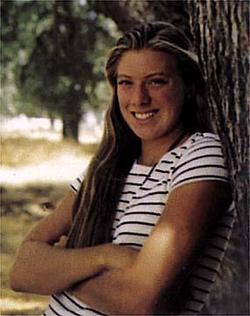
Remembering Eva

(Photo credit: Wildland Fire.com)
“This Day in History” is a brief summary of a powerful learning opportunity. You can use this summary as a foundation and launch point for further dialogue and discussion. Apply these lessons learned to yourself, your crew, your team and your unit.
Tuolumne Fire - September 12, 2004 - California

Incident Summary: The Tuolumne Fire is reported by a Stanislaus lookout at 1233 hours. Dispatch initiates a standard response, including the dispatch of a helicopter with helitack crew. 1259 Air Attack (ATGS) arrives over fire and reports fire to be between 5-10 acres, spreading up-slope and up-canyon with a steady 3-5mph wind. The fire is burning near the bottom of the Tuolumne River Canyon, just upstream of a major river confluence at 1450’ elevation in light, flashy fuels, predominantly oak leaf litter, light grass and mixed brush with an oak overstory consistent with Fuel Model 2. FDFM (Fine Dead Fuel Moisture) is 4-5% and live fuel moistures at critical stage. Temperature is 89-94, RH 18-24%, and there is no frontal or thunderstorm activity. The canyon is very steep, observed to be 80-120% slope. At approximately 1335 the helitack crew begins constructing downhill fireline. 10 minutes later they take emergency action when a sudden wind shift that causes a fire flare-up which overruns their position. Of the 7 person crew, 3 firefighters suffer minor injuries and one firefighter is killed.

(Photo credit: Find A Grave)
1305 the helicopter arrives over the fire and drops the crew on a gravel bar 3/4 mile downstream of the fire. They hike from the LZ up-canyon to a dirt road that parallels the river and walk the road toward the right flank of the fire. The fire is burning both above and below the road. Their helicopter is directed to begin dropping water on right flank above the road.

A local Division Chief is dispatched to the fire to be IC and drives past the helitack crew to the right flank. He observes a slow backing fire and returns to the location of the helitack crew, who are still hiking. Talking with the helitack captain, he does not identify himself as IC, announce a strategy or specific tactics. He does state that he wants the crew to find a safe anchor point but the crew understands him to want them to “anchor this fire on the right flank, the road down to the river”.

1335 the crew arrives at the right flank on the road and looks for access to the river and safe access to the bottom of the fire.

ATGS and IC decide to continue to use the helicopter on the right flank above the road. The helitack captain hears this exchange on the radio. ATGS receives a radio call about a spot fire and misses discussion about helitack crew working below the road. (In a post-incident interview, the ATGS will state that he thought the crew was above the road.)

After scouting down the right flank about 70 feet, it is decided to construct indirect fire line downhill for 250 - 300 ft to the river burning out from the road as they go. Safety zones are identified as down to the river, up to the road or into the black. All crew members agree with the plan and inform their helicopter pilot.

An engine is assigned to support the helitack crew. The crew is not notified that the engine was assigned to support them and that it was close by.

1340 firefighters located about 30 ft down the line from the road remark that the burn out is pulling in nicely. There is a “flutter” in the wind and the 3 firefighters closest to the road are told to grab backpack pumps just in case.

1345 a sudden wind shift causes the fire to flare-up, change direction, and overrun the crew. 30 seconds later one crew member is dead. No fire shelters are deployed.

California Department of Forestry engine tribute to Eva Schicke
(Photo credit: Not Now Not Ever.com_
Lessons Learned Discussion Points:

  • During size-up, what fire behavior did the personnel observe? If you were at a fire in a similar setting, what local terrain features and other factors might lead you to distrust the fire behavior seen? (IRPG pg 4)
  • It is common for people to have communication problems. On an incident where these issues can easily compromise anyone’s life safety, what are you going to do to minimize communication errors- as a crewmember? Crew boss? Pilot? IC?
  • Your crew has been dispatched to this fire. How will you handle the “Lookout” aspect of LCES? It is common to hear that “everyone on the crew is a lookout”. Discuss what each person must do to make this an effective alternative to the “traditional” lookout.
  • This fire had an Air Attack and a helicopter. Discuss how aerial resources can be used as additional lookouts and sources of information. What are some downfalls to using them in this role?

Additional Resources:
Click here for a printable copy of this information.
CDF helitack Crew 404 Burnover Accident Investigation Report

Learn more about this tragedy in the video below produced by the Wildland Lessons Learned Center:


**************************
“This Day in History” is a collaborative project between 6 Minutes for Safety and the Wildland Fire Lessons Learned Center.

Wednesday, September 11, 2013

IMT Lessons Learned and Shared from 9/11

(Photo credit: Depot Section Supervisor Robbie Swofford, Remote Sensing/Fire Weather Support)
Incident Management Teams at the World Trade Center
(Scratchline, Issue 1, Summer 2002)

This incident was unlike any previous Incident Management Team (IMT) assignment. The sheer scope of the incident, its cause, the number of human lives impacted, destruction, financial impact incurred, limited geographic area (1/4 square mile), multiple agency involvement, and international significance are unprecedented in IMT history.

Van Bateman's Southwest Area Type 1 IMT was mobilized to assist the Federal Emergency Management Agency (FEMA) within hours of the terrorist attack. This team worked at the FEMA Incident Command Post (ICP) in Lower Manhattan and at the New York City Fire Department ICP for approximately one month. Joe Stutler's Pacific Northwest Area Type 1 IMT, Mike Lohrey's
Pacific Northwest Area Type 1 IMT, and Joe Stam’s Alaska Area Type 1 IMT were dispatched to support responding agencies and their personnel working at Ground Zero.

Captured below are some of the IMTs’ lessons learned during this catastrophic event:

Planning
Each Section Chief and Unit Leader needs to pay extremely close attention to their personnel for signs of stress. A means of debriefing needs to be set up, both at the incident site and at the home unit, for those adversely affected. Some of these needs were identified late and personnel were already demobilized and back at their  home unit before arrangements were made for critical
incident stress management services.

Logistics
IMT's should be aware that picture identifications are a necessity. Security was very tight and security protocols constantly changing. Access into many areas was denied without proper I.D.

IMT's should expect to spend extra time to ensure compliance with existing national standards when using shower or catering units that are not on the National Contract.

In large urban areas, there can be over 100 VHF and UHF radio systems in use. Dozens of systems were brought in and used on an emergency basis. A comprehensive communication plan was lacking. A meeting to facilitate the coordination of all emergency services communication staffs needs to be scheduled early on to develop a communication plan and to reduce duplication of resources.

Operations
IMT's need additional training in FEMA operational structure including its mission, organization, and ordering procedures. This should be incorporated into team meeting agendas as well as in formal
training.

Type 1 crews were ordered to assist in the warehouse operation and with camp duties. This should be standard procedure for this type incident. Traditional camp crews are not viable due to the location, political environment, and work required.

Finance
Finance Section Chiefs must receive clear directions on specific procedures required by FEMA. They should immediately coordinate actions with FEMA comptrollers and procurement officials. The U.S. Forest Service National Incident Business Advisor should be contacted for assistance.

Information
The process to obtain permission for in person interviews was lengthy and often required more time than the media representatives could afford. Several interview requests were cancelled because interview deadlines could not be met. Phone interviews replaced live interviews when live ones could not be conducted in a timely manner. Expect that rigid protocol and multi-layered permission  processes will prevent full and effective utilization of normal IMT information resources.

Safety
Not all people are suited for a disaster assignment. Because of the emotional impact of the situation, IMT's and Geographical Area Coordination Center's (GACC) should expect a certain percentage of personnel to request incident reassignment or demobilization almost  immediately after arrival. This should not necessarily be seen as a performance problem. The reality of the situation has a greater
impact on some than they might have anticipated.

Summary
Patience is a must. What might be considered small tasks or slow movements by many IMT members can be huge strides for other agencies in time of crisis – especially when they have a long tradition of self-reliance and have been directly affected by a loss of personnel, equipment, and facilities.

**********************
Scratchline, Issue 1, Summer 2002


Tuesday, September 10, 2013

Mood Matters


Emotional Intelligence
(Photo credit: NeuroCapability)
If you are familiar with the Professional Reading Program, you are aware of Daniel Goleman's "Emotional Intelligence." "Emotional intelligence (EI) is the ability to identify, assess, and control the emotions of oneself, of others, and of groups." (Wikipedia)

Check out this piece on emotional intelligence showcasing Amanda Gore's perspective.


Fireline Challenge
Read Daniel Goleman's book "Emotional Intelligence."

Friday, September 6, 2013

Tackling Our Toolbox: Leadership in Cinema Innovation


We are thankful for our informal partnership with Drexel University's LeBow College of Business partnership with the Leadership in Cinema (LinC) program. Under the leadership of Professor Dana D'Angelo, Drexel students have taken their LinC program to new heights. Over the next few months, Dana and her students will contribute the following movies to our LinC library:
  • Wall Street
  • Hoosiers
  • The Iron Lady
  • A Few Good Men
  • Star Trek
Check out a couple of their video presentations from the spring semester and let us know what you think:


Have you implemented the LinC program into your leadership development efforts? We would like to incorporate your lesson plans into the library. For more information on LinC and submitting your lesson plans, visit "Suggest a Movie" in the LinC Toolbox on the Wildland Fire Leadership Development Program website.

Tuesday, September 3, 2013

River Rescue: Miles City BLMer Pulls Girls from Yellowstone River

On Aug. 4, 2013, two sisters swimming in the Yellowstone River in southeastern Montana were saved by a BLM employee after they were carried downstream by the swift river…
BLM Miles City Fire/Fuels Range Technician Justin Hanley is credited with saving two sisters from drowning in the Yellowstone River on Aug. 4, 2013. Hanley lives with his wife near the south bank of the river near where the incident took place and responded quickly to initial calls for help. BLM photo.
BLM Miles City Fire/Fuels Range Technician Justin Hanley is credited with saving two sisters from drowning in the Yellowstone River on Aug. 4, 2013. Hanley lives with his wife near the south bank of the river where the incident took place, and he responded quickly to initial calls for help. BLM photo.
According to a local report, the girls - ages 10 and 14 - were playing in the Yellowstone when they were overcome by the strong flows and pulled into the deeper part of the river channel. Miles City Fire and Rescue Capt. Cameron Duffin said the girls were carried almost a mile downstream before being rescued.

Bureau of Land Management Miles City Range Technician Justin Hanley and his wife Carolina live near the Seventh Street Bridge where the incident occurred. He was alerted to the situation Sunday afternoon by the actions of the girls' frantic grandmother as she ran across the nearby Roche Jaune fishing access parking lot. The grandmother, with another child on her hip, was searching for assistance when the Hanleys spotted her from their front room.

"Carolina could see that something wasn't right; that we'd better check it out," said Justin.

After speaking with the woman, Justin ran to the river's edge with his wife. He soon spotted the victims and sprinted downstream along the south bank and onto the flood dike to get ahead of the girls.

"They were holding on to each other, each pushing the other up out of the river to get a breath; like a teeter-totter," said Justin.

By the time that Justin was parallel to the girls, he knew he had to go in, he said. He "kind of belly-flopped into the water" painfully catching his hip on the submerged, jagged edge of a concrete block. He back-stroked into the main channel.

"I felt the current grab me; it was strong enough to flip me back on my front," he said. Reaching the sisters, Justin grabbed both and headed back. Both girls were exhausted, he said, noting that he too was about to reach his limit. The older sister had aspirated water and was weak; she soon went unconscious.

As Justin made incremental progress towards the bank, he continually felt for the bottom but found only deeper water. After what seemed like forever, a combination of current and Justin's one-arm stroke got them to where he could occasionally feel gravel, and he pushed closer toward the shallows and the rescue personnel who were now atop the dike. Justin and the conscious younger sister were completely spent at that point, and shallow water came none too soon.

An east-facing view of the Yellowstone River where the near-drowning incident occurred Aug. 4. The river originates in Yellowstone National Park over 330 miles to the west. By the time it reaches the outskirts of Miles City the river has grown considerably from numerous contributing tributaries. Photo by Mark Jacobsen
An east-facing view of the Yellowstone River where the near-drowning incident occurred Aug. 4. The river originates in Yellowstone National Park over 330 miles to the west. By the time it reaches the outskirts of Miles City, the river has grown considerably from numerous contributing tributaries. Photo by Mark Jacobsen.
Justin recalled standing in the shallows, catching his breath, as he listened to the resuscitation efforts on the 14-year old, out of sight and up on the dike.

"It seemed like forever," he said. He remembers people urging "Breathe! Breathe!" and finally hearing the welcome sound of the girl retching, breathing and coming to.

Both victims were whisked to the local Holy Rosary Healthcare unit by ambulance, and the 14 year-old was transferred to a Billings medical facility. The 10 year-old was later released, tired but otherwise uninjured.

Every year, reports of would-be rescuers who themselves become statistics are a reminder of how dangerous river rescues can be, especially without a life jacket. First responders and others who have had training can vouch for the fact that actually "going in" is the last resort, which may account for the reluctance of the paramedics who stayed on shore, even while Justin was struggling in the shallows to deliver the girls.

As for Justin, he knows full well the risks and dangers of the Yellowstone.

"It makes my hair stand on end," he said, as he recalled how deceptively strong the river's current was as it gripped him when swimming to the sisters. "I've seen that river take a whole live tree, pull it completely under till it disappears and then see the same tree come shooting out of the river way down stream."

But when asked what he was thinking, he was matter-of-fact.

"If those were my kids, I'd want someone to rescue them," he said.

And for two young sisters who again have their whole lives ahead of them, that makes all the difference.

By: Mark Jacobsen, public affairs officer, BLM Eastern Montana/Dakotas District

**********************
Reprinted with permission from "The BLM Daily," August 29, 2013.


Saturday, August 31, 2013

Laboring on Labor Day


The NWCG Leadership Subcommittee extends their heartfelt appreciation to the labors of the wildland fire community. We realize many of our members work long hours during holidays and weekends. We dedicate today to all who "protect life, property, and natural resources while engaging the forces of nature."

Friday, August 30, 2013

What is Your 'Trouble Tree'?

Have you taken the Leading with Courage 2013 Professional Reading Challenge to read "A Captain's Duty" by Richard Phillips? While reading the book, I was captivated by the ritualistic behavior of the Somali pirates who even in the midst of holding Captain Phillips prisoner conducted ceremonial rituals. Certain rituals are vital to cohesiveness and performance of the team.

Bill Miller, Training Specialist at the National Advanced Fire and Resource Institute and NWCG Leadership Subcommittee member, shared the following video of ceremonial rituals taken while conducting leadership training for wildland fire crews in South Africa. This video was taken during their graduation ceremony, but chanting and dancing were a daily ritual for these firefighters.


Wildland Fire Leadership Challenge:
  • Read The Power of a "Project Beard" and Other Office Rituals by Sue Shellenbarger. Shellenbarger shares her thoughts on how office rituals can be used to reduce anxiety and help individuals perform better.
  • Discuss with other leaders and team members rituals that could have a positive impact on performance.
A Story: Hanging Your Worries on the Trouble Tree
(Original author: Unknown) 

The carpenter who was hired to help a man restore an old farmhouse had just finished his first day on the job and everything that could possibly go wrong went wrong. First of all, on his way to work he had a flat tire that cost him an hour’s worth of pay, then his electric saw broke, and after work his old pickup truck refused to start.
His new boss volunteered to give him a lift home and the whole way to his house the carpenter sat in stone silence as he stared out his window. Yet on arriving, he invited his boss in for a few minutes to meet his family. As they walked toward the front door, he paused briefly at a small tree, touching the tips of the branches with both hands. When he opened the door, he underwent an amazing transformation. His tanned face was one big smile as he hugged his two small children and kissed his wife.
Afterwards, the man walked his boss to his car to say thank you. Now on their way out of the house, the boss’ curiosity got the best of him so he had to ask the man about the tree on the front porch. He said, I noticed when you came up on the porch before going into your house you stopped and touched the tree, why?
"Oh, that’s my trouble tree,” he replied. "I know I can’t stop from having troubles out on the job, but one thing’s for sure – my troubles don’t belong in the house with my wife and children. So I just hang them up on the tree every night when I come home. Then in the morning I pick them up again.”
"Funny thing is,” he smiled, "when I come out in the morning to pick ‘em up, they aren’t nearly as many as I remember hanging up the night before.”

_____________________
References:

Tuesday, August 27, 2013

Standing Up to Broken Trust

(Photo credit: 123rf.com)
If your leader broke your trust by his/her actions, would you have the strength to stand up to him/her? Bret Simmons shares his thoughts on the subject in "A Failure of Leadership."

Peer Accountability (Leading in the Wildland Fire Service, p. 54)

Leaders create teams in which team members hold each other accountable. More than any system of reward and discipline, more than any policy, the fear of letting down respected teammates and peers represents the most effective means of accountability.

Peer accountability is an outgrowth of trust and commitment. We set the example by demonstrating that team members can hold us accountable, encouraging them to give us feedback on our own performance in meeting stated goals.